

-
-
Education of the Virginpolychrome terracotta sculpture by Luisa Roldán at the Blanton Museum of Artpart of the Suida-Manning Collection, 2017.1346
From the Offices menu option on the Diocesan homepage, visitors may access the Office of Catholic Schools page by clicking on an image of a sculpture. It, The Education of the Virgin by Luisa Roldán (1652-1706), captures a tender, everyday moment between the young Virgin Mary and her parents, Saint Anne and Saint Joachim. By including both Mary's mother and father in the miniature figural group, Roldán emphasizes the important role parents play in the spiritual and moral education of their children.
This page includes four additional tabs that reflect the same sentiment. Before clicking on 10 Reasons, Primary Educators, Choose Catholic Education, and Parental Choice, take a moment to learn more about the artwork below. Although The Education of the Virgin serves as an earthly reminder that our parents are our first teachers, the many angels who wait on Mary and her family also confirm the religious significance of the subject and the exceptionality of the Virgin Mary within the Catholic tradition. In fact, painted on the cushion of the chair behind Anne’s back is an image of Anne and Joachim’s embrace at the Golden Gate, a moment after the angel Gabriel announced to Joachim that Anne, his elderly wife, had immaculately conceived a child. Mary’s miraculous conception was an important Catholic theological point because she was born without original sin (the innate tendency of all human beings to disobey God) and was therefore able to bear Christ, the Christian incarnation of God on earth. Roldán also referenced Mary’s birth at the bottom right corner of the sculpture, where a small, chubby angel presents a roll of fabric for swaddling Mary as a newborn, a birthing cushion for her mother Anne’s use during labor, and a woven basket filled with cloth that served as Mary’s bassinette--indeed, these elements also foreshadow Mary’s future role as mother of Christ. In this way, Roldán refers to three phases from the life of the young Virgin at once: her Immaculate conception, her angelically attended birth, and her upbringing by two devout people. The sculpture thus not only imagines a tender scene between parents and daughter but also affirms Mary’s extraordinary position within the Catholic tradition and her worthiness to become the mother of God.In the 1600s, this kind of small, painted terracotta (baked clay) sculpture would have been used in private devotion, usually placed on a table inside of the home, reminding its viewers both of the importance of obedience to one’s elders and to God as well as the need for parents to provide religious and moral education to their children, including girls. This is especially interesting given that, at this time, women were becoming increasingly literate and exercising greater (although still extremely limited) cultural and political authority than they had in earlier periods of Spain’s history. Also significant is that, until the modern era, women were not allowed access to professional artistic training and the few women who became artists almost always learned their craft from their fathers. The Education of the Virgin, which is an image of instruction between parent and child, may thus have had personal significance for Roldán, who was taught how to sculpt by her father, Pedro (1624-1699), an artist from Seville.Due to the fragile nature of terracotta, few of Roldán’s sculptures survive today. The Blanton’s example was conserved in 2019, which revealed that the top of each woman’s head has a small hole where a metal crown would have been inserted. Additionally, at Joachim’s feet are the four paws of a now-lost cat, which may have been competing with the book on Anne’s lap for Mary’s attention. Furthermore, Roldán may have roughened the patch of clay at the center-front of the composition to attach a small dog, which is included in a similar sculpture of the same subject that is now in a private collection in Spain. Even without these elements, Roldán’s Education of the Virgin is an important example of her late work, of which only about twenty examples still exist in the world.
-
Ten Reasons Why Catholic Education Still Mattersfrom the Alliance for Catholic Education by Rev. Ronald J Nuzzi on 27 Jan 2021in Education Choice Resources - https://ace.nd.edu/resources/ten-reasons-why-catholic-education-still-matters
1. An Incarnational View of the World
Catholic School students learn that God is present and active in their lives and in the world. They learn to recognize the "footprints of God" in their daily experiences, especially in the midst of life's challenges. They develop a sense of "sacramental awareness". They see the signs of God's love around them, and become instruments of God's grace in their own neighborhoods, communities and the world. In an incarnational view of the world, there is no such thing as a secular subject as all learning helps to develop and bring to full bloom that image of God that is in each person.
2. Immersion in the Paschal Mystery
Our lives are a series of small and not so small dyings and risings. In union with the Paschal Mystery, we realize that there is redemptive power in suffering, and in the power of the cross. In it lies the answer to the mystery of all of life's successes and failures. In the experience of the Paschal Mystery, we also realize the need for community. Like Jesus, we encounter our own Simon of Cyrenes to help us along the way. Wins and losses on the athletic field, As and Fs in class, and laughter and tears in our lives are the way we participate in Jesus' dying and rising.
3. The Value of Relationships as a Reflection of the Divine
Catholic school students learn to experience God's grace and presence in their lives through their relationships with family, friends and teachers. The loving and supportive relationships they experience are reflections of the love and life-giving dynamic of the Trinity. As a community we celebrate our successes and achievements. We share grief and downfalls. We unite together in solidarity, and even challenge each other to become better reflections of the divine. We are made for community.
4. A Nuanced View of Scripture
Catholic school students are given the opportunity to explore the beauty and richness of Sacred Scripture seen through the lens of faith and lived out in daily practice. They experience the ongoing revelation of God in Scripture as the One who leads the Israelites through the promised land, and who redeems them through His cross and resurrection. They also come to view the human person as created in God's image and likeness, and destined for eternal life. They learn to apply Scripture to their own lives as a tool for prayer and the true guide for virtuous living.
5. Civic Engagement
In recent research, it has been reported that private school graduates are significantly more likely to actively participate in civic activities than their public school counterparts. Catholic Schools were ranked #1 in the percentage of graduates who actively participate in civic and community activities such as voting, volunteering, letter-writing to legislators, Catholic Concerns Day, and donations to charity, not just for a tax write-off, but out of a sense of the requirements of justice.
6. Service for the Common Good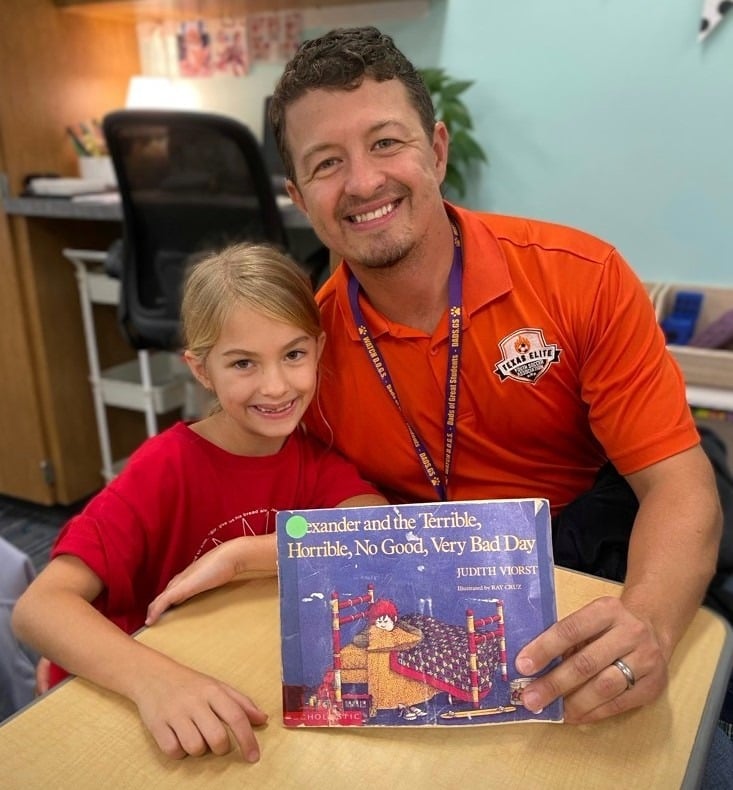
Catholic schools promote service as an essential component of their curriculum. Many Catholic schools have service programs from kindergarten through twelfth grade. Higher education programs such as the Jesuit or Dominican Volunteer Corps promote service at the undergraduate and graduate levels. Diocesan organizations such as Catholic Family Services provide resources and help to people from all walks of life. Catholic school students learn that since community is at the heart of who we are, there are no strangers, only brothers and sisters in the Lord. We have a responsibility to respond to the needs of others because we are all part of God's family.
7. Discipline as a Faith Expectation
Catholic schools promote self-discipline through clarity of moral vision that is based on the Gospel. Students are challenged to be Christ-like in word and action. They are asked to examine their choices and action in light of the Ten Commandments and the Gospel law of love. They are given a theological foundation for ethical behavior. Students are not good because they act in accord with rules and expectations. Rather, because students are good, i.e. sons and daughters of God, they are expected to act and make choices that are in keeping with this dignity.
8. The Centrality of Arts, Ritual, Drama, Music to the Life of Faith
Through Catholic education, students are exposed to the richness of the religious tradition. Music, Art, Literature, Drama and Ritual are rooted in the rich history of the Church, and find their truest glory as an expression of divine praise.
9. The Fullness of the Catholic Identity at the Heart of the Church
Catholic education has always been at the heart of the Catholic mission. Catholic education, and the students who are the product of it, have been called the "greatest work of the Church". They have been entrusted with the fullness of faith and have been charged with the mission of evangelization. They are to go out into the world and share the gifts they have received, as doctors, lawyers, policemen, firemen, businessmen and women, teachers, priests and religious, all as Catholic school graduates. Catholic school graduates are a leaven in society, helping the broader community to be the best that it can be.
10. Personal Excellence as a Spiritual Goal
Catholic school students learn that excellence is a response to God's blessings. Academic excellence is not a gospel value in and of itself. The Sermon on the Mount doesn't say "Blessed are you who get all A's." Education must have an altruistic orientation. Students learn so as to help others, and make a difference in the world around them.
-
Making Sense of Parents as 'Primary Educators'From The Cardinal Newman Society by Patrick Reilly on 12 January 2024
in Academics Commentary, Parent's Role Blog - https://cardinalnewmansociety.org/making-sense-of-parents-as-primary-educators/
Parents are the first and foremost educators of their children.
Catholic educators can sometimes ignore this fact, especially when students appear to lack solid formation and even basic care in the home. Trained to be experts in pedagogy and curriculum, teachers and especially college professors may not think much about what parents want and may regard even simple communications from them as interference and undue distrust of professionals.
Parents, too, can forget or refuse their key role in the formation of their children, for whom they are accountable to God. Generations of parents have been told to take a hands-off approach to child-rearing. And many Catholic adults do not receive the sacraments and deny Catholic teachings, while failing to form their children in the faith.
Still, the Church is clear: “Since parents have given children their life, they are bound by the most serious obligation to educate their offspring and therefore must be recognized as the primary and principal educators” (Gravissiumum Educationis, 3).
So how does this work? Within the rapidly growing field of homeschooling, there is no parent-school relationship—but parents still must collaborate with homeschool curriculum providers, publishers, tutors, priests, and collaborating parents. In schools and colleges, a “parent as primary educator” policy can be difficult to navigate. Yet respecting parents’ primary role is necessary, even essential, to Catholic education.
Sources of parents’ role
Some have misread Vatican documents to imply that a parent’s role as “first” educator refers only to early, pre-school learning, and the role of primary educator must later be given over to professional teachers. But the Vatican speaks many times of the parents’ role in formation throughout a child’s life, and despite objections arising from our culture’s insistence that an 18-year-old no longer needs parents, I think today the job continues through college.
As for whether only professionals should direct education, there’s the obvious fact that, throughout much of Ch
 ristian history until the last couple centuries, most parents partly or wholly handled the education of their younger children.
Parenthood, practiced rightly with due respect for the rights of the child, is a natural aspect of the vocation of marriage. It follows from the lifelong love and commitment of a man and a woman, producing offspring for whom the parents are primarily responsible in the graced bond of matrimony. If a child’s guardian is not a natural parent in a loving marriage, still the guardian assumes responsibility for providing an upbringing that attempts, as much as possible, to fulfill the nature and obligations of parenthood within marriage.
Education is a key obligation of parents. Vatican documents that reference parents’ primary role in education often cite the natural and divine status of the family.
Parents are the ones who must create a family atmosphere animated by love and respect for God and man… It is particularly in the Christian family, enriched by the grace and office of the sacrament of matrimony, that children should be taught from their early years to have a knowledge of God according to the faith received in Baptism, to worship Him, and to love their neighbor. (Gravissimum Educationis, 3)
Here it is clear that the Church’s foremost concern for children is their integration into the life of the Church and their relationship with Christ. The family is vital to the moral and social formation of young people. However, does this suggest that intellectual formation belongs primarily to professionals and is not included in parents’ primary role? The Vatican documents repeatedly speak of parents’ primary role even when their children are enrolled in schools—even Catholic schools—and so parents must be responsible for intellectual as well as moral and social formation.
We can also find a foundation for parents’ educational role in the rite of Baptism. Parents affirm that they will raise their child in the Catholic faith. Many interpret this to mean catechesis only, but baptism begins the Christian’s journey to salvation, which implies more than knowledge of the tenets and practices of the faith—as important as these are. The human gift of intellect is key to human dignity and our ability to know, love, and serve God and others. Surely the full work of Catholic education—forming the intellect integrally with one’s physical and moral development, so that a young person is healthy, knowledgeable, wise, and virtuous—is entailed in Catholic formation. Therefore, it can be said that a Catholic child has a baptismal right to Catholic education from the parents.
A health analogy
St. Thomas Aquinas employs an analogy of bodily health when explaining how people learn. I think the analogy can also be applied to the question of a parent’s role in education.
Consider this: aside from education, parents are responsible for ensuring a child’s physical health. They do this by providing food and shelter, teaching healthy habits, and caring for illnesses and injuries. If a parent must seek the professional help of a doctor—and invariably this will be necessary in today’s world—the parent never considers simply handing over primary responsibility for the child’s health. The doctor provides much-needed expertise, and the parent yields to that expertise to the extent necessary, but ultimately the parent must decide what is best for the child, including the choice of whether to get help for the child and which doctor should provide it.
Why is education perceived to be any different? One reason may be that schools require more waking hours with a child than even the parents have at home—and that’s something I believe deserves some reflection. But regardless, ultimately it is the parent’s primary responsibility to ensure that a child is educated, and that includes the choice of educator. Yet so few parents today take up this responsibility, blindly accepting or even ignoring what happens in school.
Catholic educators may chafe at substantial parent involvement with a school or college’s day-to-day activities. And it’s right that Catholic schools limit such direct engagement, if it interferes with education. But parents must at least have the information needed to assess whether a school is serving the parent’s needs and objectives for their child, so the parent can enter into dialogue with the school or choose to withdraw. The parent can also choose to take on a child’s education entirely.
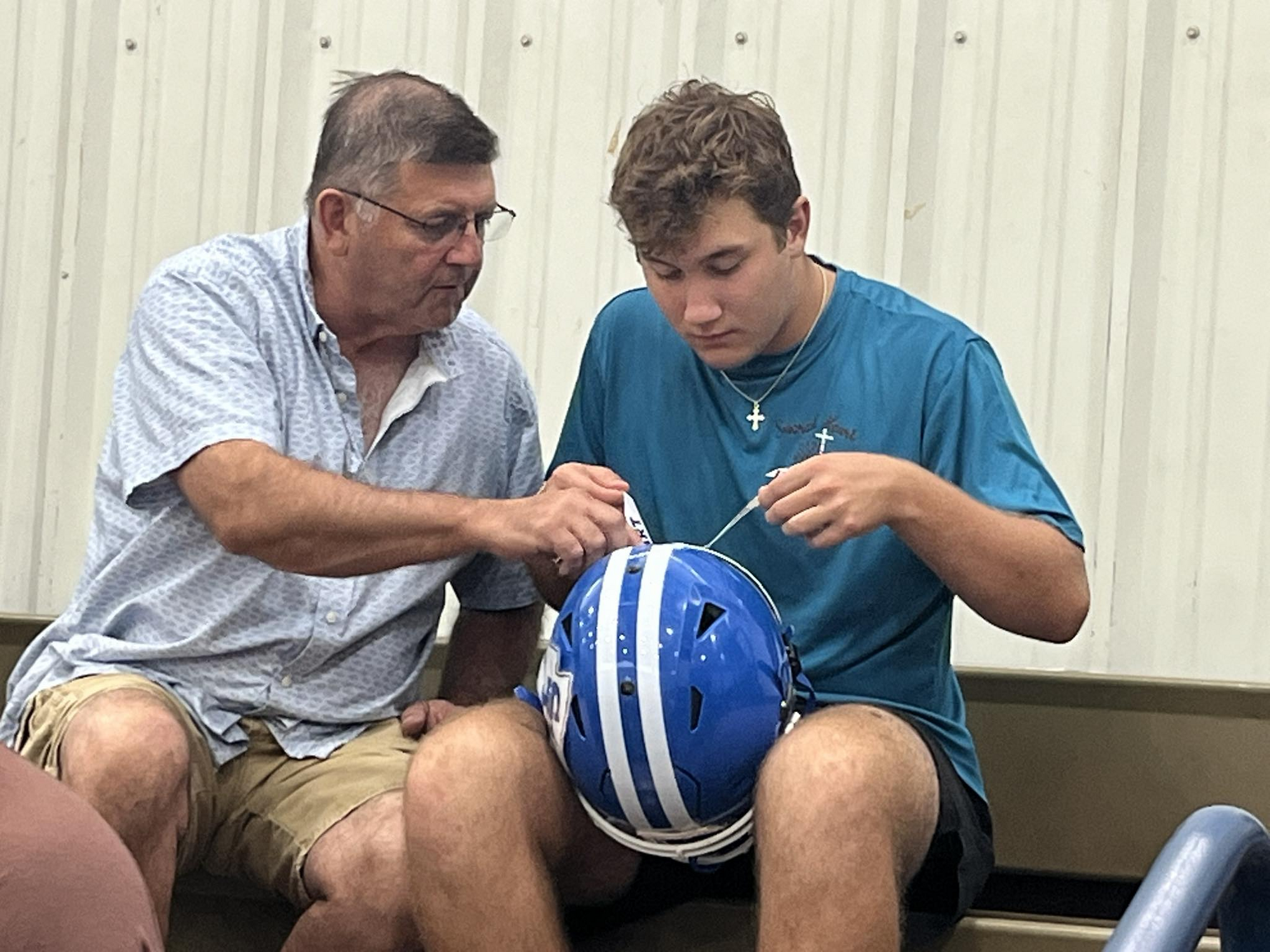 On the all-important matter of monitoring fidelity to Church teaching and fulfillment of the mission of Catholic education, “This responsibility applies chiefly to Christian parents who confide their children to the school. Having chosen it does not relieve them of a personal duty to give their children a Christian upbringing” (Sacred Congregation for Catholic Education, The Catholic School, 73). By “utilizing the structures offered for parental involvement,” parents must “make certain that the school remains faithful to Christian principles of education.”
Ultimately it comes down to this: parents must take full responsibility for the education of their children and the choice whether to employ professionals in that task—and which ones. Catholic educators, in service to parents, should fully support this role and help parents know and choose the special value of faithful Catholic education. In all, the complete Catholic formation of the student must be paramount.
-
Top 4 Reasons to Choose a Catholic Education1. Religious and Moral Formation
As the United States Conference of Catholic Bishops has written, "Catholic schools afford the fullest and best opportunity to realize the fourfold purpose of Christian education, namely, to provide an atmosphere in which the Gospel message is proclaimed, community in Christ is experienced, service to our sisters and brothers is the norm, and thanksgiving and worship of God are cultivated."
In the face of increasing secularization, Catholic schools provide an atmosphere that privileges Gospel values and the role of parents as the primary educators of their children.
2. High-Quality Education
According to the National Catholic Educational Association, ninety-nine percent (99%) of Catholic secondary school students graduate and eighty-eight percent (88%) go on to college. In general, on national and standardized tests, Catholic schools consistently outperform public and other private schools by as much as twenty percentage points.
3. A Safe, Supportive Environment
Reverence for the human dignity of every person comes from recognizing Christ in self and others. More than “drug-free zones” or “gun-free zones," Catholic schools strive to be “Christ-centered zones."
4. Rigorous Curriculum
Catholic schools offer competitive STEAM programs, unique electives, college preparedness, and practical applications for a well-rounded student.
sources: ace.nd.edu/advocates/why-catholic-schools, https://www.montereybayparent.com/
-
OUR GREATEST AND BEST INHERITANCE:
CATHOLIC SCHOOLS AND PARENTAL CHOICEpublished by the United States Conference of Catholic Bishops - Secretariat of Catholic EducationCatholic Education Toolkit - https://ace.nd.edu/sites/default/files/2021-01/PEA_OurGreatestInheritance_opt.pdf The Catholic School Advantage:
Forming Children for College and Heaven
1. Catholic schools form children for a personal and living encounter with Jesus Christ:
- Catholic school students are more likely to pray daily, attend church more often, retain a Catholic identity as an adult, and donate more to the Church.
- Students in Catholic schools demonstrate higher academic achievement than their public school peers from similar socioeconomic backgrounds.
- The more disadvantaged a child is, the greater the relative achievement gains he or she experiences in a Catholic school.
- The achievement gap between students of different racial and/or socioeconomic backgrounds is significantly smaller in Catholic schools than public schools.
- 99% of Catholic school students graduate from high school on time, and 85% of Catholic school graduates attend college.
- A child who is black or Latino is 42% more likely to graduate from high school and 2.5 times more likely to graduate from college if he or she attends a Catholic school
2. Catholic school communities stimulate parental engagement:- Inner-city Catholic school parents report taking an active role in their children's education, and they believe that participating in the Catholic school community represents an opportunity to break the cycle of poverty.
- Latino Catholic school parents believe their children are more motivated, more focused, and working harder since enrolling them in a Catholic school.
3. Catholic schools generate social cohesion and preserve civic order in the local community:- Neighborhood social cohesion decreases and disorder increases following the closure of a Catholic elementary school.
- Police beats in Chicago that experienced at least one Catholic school closure had a higher crime rate than those in which there were no closures.
4. Catholic schools are sacred places serving important civic purposes:- Catholic schools save taxpayers more than $20 billion annually.
- Catholic school graduates enjoy higher earning potential than public school graduates.
- Catholic school graduates are more civically engaged, more likely to vote, more tolerant of diverse views, and more committed to service as adults, and less likely to be incarcerated than their public school peers.
Parental Choice in K-12 Education:
A Matter of Social Justice
The term “parental choice” in the context of K-12 education typically refers to policies and programs that empower families to choose the best school for their children. Through parental choice programs, at-risk families whose children would otherwise attend assigned public schools are given financial resources enabling them to attend the school of their choice, including traditional public schools, public charter schools, both secular and religious private schools, and homeschooling.
Forms of Parental Choice
Such programs are typically found in one of the following four forms: Opportunity Scholarships (also known as “vouchers”), Scholarship Tax Credits, Parental Tuition Tax Credits, and Education Savings Accounts.
1. In Opportunity Scholarship programs, public education funding “follows the child,” as families receive some portion of the public funding allocated toward educating the child in the traditional public school system.
2. In Scholarship Tax Credit programs, the state permits individuals and/or corporations to donate to qualified nonprofit organizations in exchange for credits against their state-tax liability. These non profit organizations use the contributed funds to provide scholarships for eligible students interested in attending a Catholic school.
3. In Parental Tuition Tax Credit programs, parents receive a credit or deduction on their state income taxes that can be used for a child’s educational expenses, including private school tuition. Although several states have such programs, only North Carolina and Alabama provide a credit sufficiently large enough to affect a family’s ability to enroll their child in a private school.
4. In Educational Savings Account (ESA) programs, parents receive a deposit of public funds into government authorized savings accounts. These funds can be used for private school tuition, textbooks, tutoring, testing fees, online learning, or higher education expenses such as community college costs.
Each of these forms typically restricts eligibility to a particular set of students.1. Means Tested: eligibility based on family income2. Failing Schools: eligibility based on the performance of students' assigned public schools and districts3. Special Needs: eligibility restricted to children with exceptional educational needs
Parental Choice Today
For nearly 150 years, the Church has unequivocally taught that parents have the right and responsibility to serve as the primary educators of their children. To assist them in this sacred duty, the Church has articulated clearly that children have the universal right to an education in faith, and the state has the fundamental obligation to enable such a right. In both written word and lived witness, the Church has advanced parental choice as a fundamental part of its mission to protect the equality of educational opportunity that is the birthright of all children. Since the passage of the first parental choice program in Milwaukee in 1990, bishops and state Catholic conferences have been among the most important advocates for parental choice.
More than 245,000 children participated in a publicly funded private school parental choice program during the 2012-2013 school year. Approximately 50% of these children are enrolled in Catholic schools.
There are currently more than 30 parental choice programs operating in 17 states and the District of Columbia. Through these programs, more than $950 million in state and federal funds were available to create scholarships for at-risk children during the 2012-2013 school year.
The Constitutionality of Parental Choice
At the Federal Level
The United States Supreme Court has made clear that parental choice is constitutional, unequivocally rejecting the claim that opportunity scholarships (“vouchers”) and scholarship tax credits violate the First Amendment’s Establishment Clause. The Court has clearly stated that the Constitution permits public education funds to flow to authentically religious schools through a parental choice program, so long as the program is religion-neutral and open to a broad class of beneficiaries.
The fundamental reason that parental choice does not violate the federal Establishment Clause is that any aid to religious schools in these programs is indirect. Parents – not the government – determine how the public funds are spent among a variety of religious and non-religious educational options.
At the State Level
Although state courts can interpret their respective constitutions more restrictively than the U.S. Supreme Court has interpreted the Establishment Clause, well-crafted parental choice programs are constitutionally permissible in almost every state.
More than 35 state Constitutions contain provisions that prohibit public funding of religious institutions such as Catholic schools. These provisions, often referred to as “Blaine Amendments” are a sad legacy of anti-Catholic bigotry. However, these provisions have not proven to be an insurmountable barrier to a well-designed parental choice program in most states. In fact, almost every one of the states with parental choice programs has a “Blaine Amendment” in its constitution.
Parental Choice Benefits
1. Parental Choice Improves Student Achievement and Attainment:- Students participating in the Milwaukee Parental Choice Program demonstrated higher academic growth in reading than similar students in Milwaukee Public Schools.
- Students participating in the Washington, D.C. Opportunity Scholarship Program achieved more than 3 months of additional gains in reading over their public school peers in a single school year.
- Students participating in the Milwaukee Parental Choice Program had a graduation rate more than 7.2% higher than students in Milwaukee Public Schools. Students participating in the Washington D.C. Opportunity Scholarship Program had a graduation rate more than 20% higher than similarly situated public school students.
- Students who are black participating in a privately funded parental choice program were 24% more likely to enroll in college as a result of receiving a voucher.
2. Parental Choice Empowers Families:- More than 90% of parents participating in the Washington D.C. Opportunity Scholarship Program report being happy with their current scholarship school.
- More than 97% of the parents participating in the Florida Scholarship Tax Credit report being happy with their current scholarship school.
3. Parental Choice Provides Fiscal Savings:- The Indiana Choice Scholarship Program saved the state more than $4 million in its first year of operation.
- The Milwaukee Parental Choice Program saved Wisconsin approximately $51 million in 2011.
- The estimated 5-year savings of the Washington D.C. Opportunity Scholarship Program is $76 million.
- The Florida Scholarship Tax Credit will save the state more than an estimated $100 million from 2012-2014.

-